

The historic contest between England and Australia teams has been defined through iconic players. Within, fans share their favourite cricketers across the men's Ashes timeline.
The Pugnacious Bairstow
When asked about a preferred player, the pick is Jonny Bairstow. His journey in Ashes contests aptly captures the triumphs and tribulations of an English player. It began in the 2013 series, where he tempered his natural game to dig in alongside Ian Bell. Later that year, he was promoted as a replacement for gloveman Matt Prior, facing the fearsome pace of Mitchell Johnson despite no red-ball preparation for three months.
He enjoyed a series-winning return in the 2015 series and remains the sole England player to have scored two away Ashes centuries after the year 2011, an achievement managed despite ferocious local press scrutiny. A difficult series came during 2019, though there was a crucial contribution in Headingley assisting the legendary run chase by Stokes and Leach. Post-injury for the 2023 series, a stunning unbeaten 99 at Manchester was cruelly robbed of a match-winning status by inclement weather.
The Inimitable Syd Barnes
Few bowlers inspire such reverence as the phenomenal Syd Barnes. His performance taking 13 for 163 in 80 overs in the 1901-02 Ashes Test stands as testament to his skill. It's fascinating to ponder how much more he might have achieved if he were a less difficult man to handle. With an incredible 6,229 wickets with an average of 8.33 runs, he is regarded by many as the finest bowler ever. Studying his records in childhood was completely enthralling. What a magnificent rogue, truly incomparable. In the words of cricket administrator Billy Griffith: “What was remarkable about him was that all his contemporaries thought him the best there was. There was never any doubt about it.”
Richie Benaud
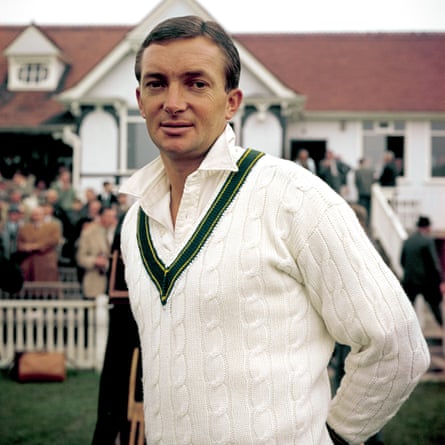
To countless fans, the favourite Ashes cricketer is the legendary Richie Benaud. Starting high school during 1961 aligned with that year's Ashes, and the excitement was provided by the glamorous skipper. Benaud didn't look like other cricketers; he possessed flair and audacity, a stark difference to the seemingly traditional approach. He was eloquent, commanding captain who came known for playing attacking, exciting cricket.
Vivid recollections from that season, where a lifelong love affair with cricket began, centre on the last day at the fourth Test. Watching intently the broadcast, a young fan watched the home side require 256 to win. A good start saw Ted Dexter play what many consider one of the great knocks. Yet his dismissal for 76, caught by Wally Grout bowled by Benaud. Optimism persisted with captain Peter May arriving at the crease. A delivery from Benaud saw May deflect it to leg. Next up, he pitched outside the pads, it turned viciously out of the footmarks and hit the stumps. The captain was dismissed for a duck, the silence deafening. Benaud won the match with figures 6 for 70 and Australia kept the Ashes. It was mixed feelings—desperate for an England win yet in awe of a true hero.
Ian Botham
Simply put, he is the greatest all-rounder. Relentless, inspirational, brilliant. Remember Headingley 1981, the exploits at Old Trafford that same year, the victorious tour of Australia, and his famous retort about Merv Hughes. An icon both for his charity work and his immense fortitude.
The Underrated Harry Boyle
The annals sometimes forget figures like Harry Boyle, yet he deserves to rightfully be in the top 100 key cricketers in the rivalry. He was the legendary Spofforth's new-ball partner during the famous Oval Test of 1882, and his contribution was as vital as Spofforth's in securing the win. Indeed, he was the one who dismissed Edmund Peate to win that historic game. Although Fred Spofforth is rightly hailed as the pioneer of pace bowling, Boyle proved modest , self-effacing, always putting the team first. This modesty has led to his legacy becoming somewhat forgotten, despite at his passing widely recognised as a pivotal personality in cricket's history.
The Incomparable Don Bradman
The choice must be Don Bradman. Whilst Shane Warne is a legend, the monumental volume of runs Bradman amassed against England, combined with his shrewd captaincy, establishes his status as more than a great player but as the only possible answer. A batting average just shy of ninety, two triple centuries, and a brilliant double-hundred after a bold move to flip the lineup to protect his senior players on a damp pitch at the MCG during 1937.
Though not from his era, every enthusiast becomes familiar with his exploits from the 1930s , particularly, the Invincibles tour. Whilst many recall his last innings zero preventing a 100+ average, others cherish images of his practice relentlessly using a water tank, and witnessing him endure the vicious Bodyline tactics to still average with a 56 average in a notoriously difficult series for batsmen. He remains the greatest batsman for countless fans.
The Cerebral Mike Brearley
He took the art of leadership, so vital in cricket, to a new level. He epitomised his era by demonstrating that success against Australia, especially in Australia, required more than hard work and brute force. He inspired with considered, astute guidance, creating an environment where his players' true qualities could flourish. His understanding of the game, the match state, and player psyches excelled precisely when a shift in momentum was required.
This was a beautifully subtle, subtle method {that challenged|contradict


